Gear & Guides / Truck & Automotive
Portable tire inflators: What’s worth keeping in your car?
A tire inflator doesn’t have to do everything to be useful. For everyday top-ups, the appeal is simple: keep a small pump nearby, add the air you need, and put it away.
You don’t necessarily need a big compressor for that. The important part is choosing something that suits your tires and how you’ll use it.
Research-based guide, not hands-on testing. As an Amazon Associate I earn from qualifying purchases.
← Back to CartSearchIn this guide
- Where the AstroAI L7 makes sense
- Beyond the L7: other inflators
- Start with the tires you actually have
- Maximum PSI isn’t the whole story
- Will it finish the job without a long break?
- Make sure it works with your setup
- Convenience is good. A trustworthy pressure reading matters more.
- A quick way to narrow your choices
- Sources and scope
Where the AstroAI L7 makes sense
The L7 is worth a look if you want a compact, cordless inflator for keeping car or bike tires topped off. You set the pressure you want, and it shuts off automatically. Owner feedback we reviewed includes people who appreciate its size and straightforward operation.
That’s the reason to consider it: convenient tire maintenance without much equipment to carry around.
The tradeoff is how much work you expect from a small battery. Adding a little air is different from filling several tires that are very low. AstroAI does not recommend the L7 for larger truck or RV tires.
Our take: the L7 makes more sense as a handy top-up tool than as the answer to every tire problem. If compact size and cordless convenience are what you need, it belongs on your shortlist.
We haven’t tested the L7 ourselves. This assessment draws on owner feedback and manufacturer information, not our own measurements of speed, accuracy, battery endurance or long-term reliability.
As an Amazon Associate I earn from qualifying purchases.
Beyond the L7: choosing other inflators
The rest of this guide compares the wider range of inflators and compressors. References to RVs, larger truck tires and dual wheels below are about choosing other suitable equipment, not using the L7 for those jobs.
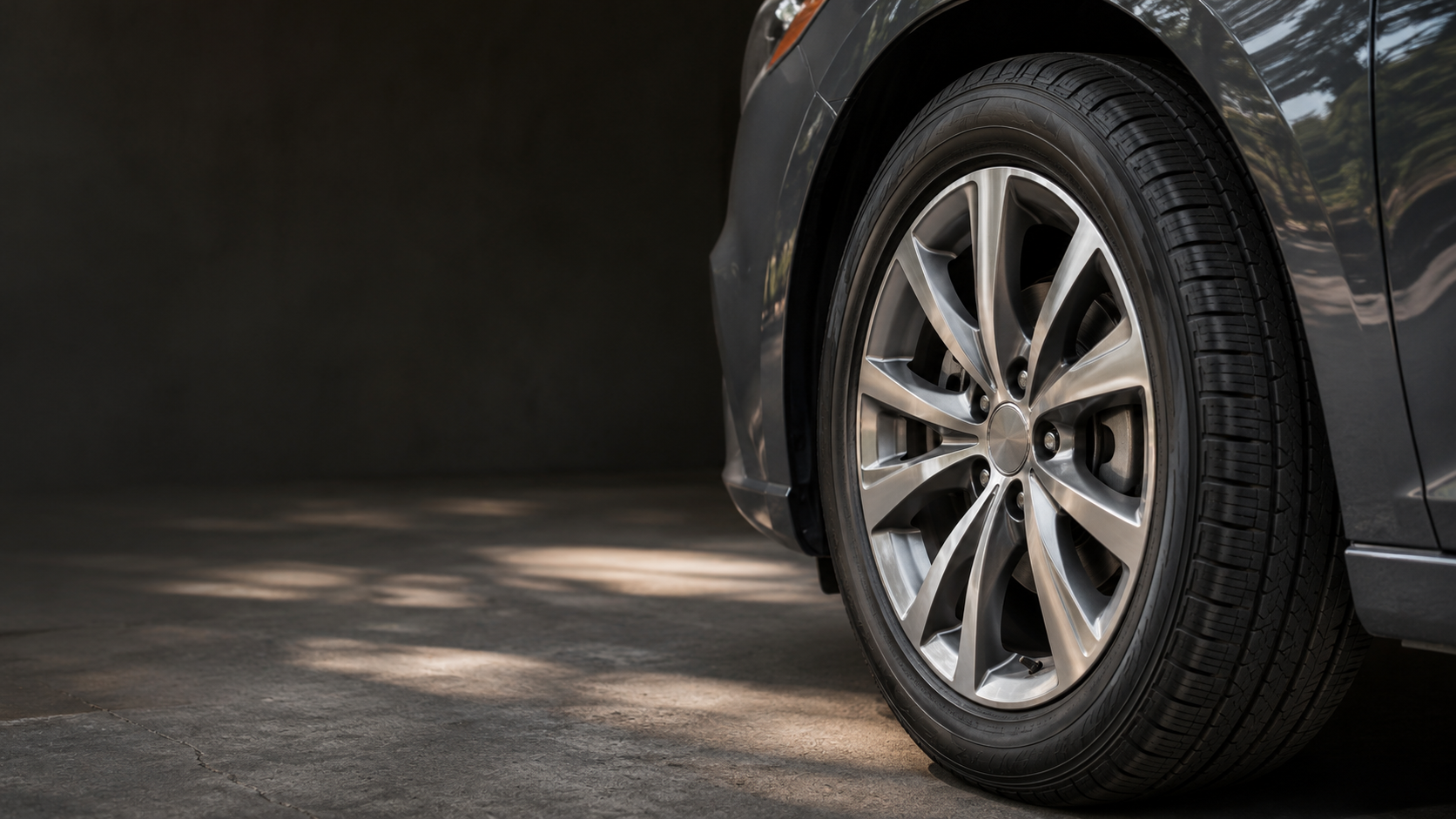
Start with the tires you actually have
A small car tire that needs a few PSI is a very different job from several large truck tires that are well below their normal pressure. Before buying, note your tire size, the pressure you normally use, and how many tires you expect to fill in one session. If you’re choosing a different compressor specifically rated for your RV tires, check hose reach to the farthest wheel and access to inner dual valves. This is not an L7 application.
Use the pressure specified for your vehicle and load. The maximum pressure molded into the tire’s sidewall is not a universal setting to aim for. A pump can add air, but it cannot choose the safe pressure for you.
Maximum PSI isn’t the whole story
Two inflators can advertise the same maximum pressure and still take very different amounts of time to fill a tire. PSI tells you pressure. CFM or liters per minute tells you airflow. What matters is how much air the pump can move as the tire approaches the pressure you need.
Look for a filling example that names the tire size, starting pressure, finishing pressure and power supply. That is more useful than comparing big numbers on the box. A pressure-versus-flow chart is useful too, especially for higher-pressure tires.
Watch for “free-air” airflow figures. Those are measured without pressure behind them and aren’t directly comparable with airflow measured at tire pressure. One CFM is roughly 28.3 liters per minute, but converting units doesn’t fix mismatched test conditions. If the manufacturer leaves the details out, don’t assume the pump will be fast.
Will it finish the job without a long break?
Every compressor has operating limits. Some need regular cooling breaks, and those breaks matter when you have several tires to fill. Read the instructions for the exact model rather than assuming it can run until you’re finished.
“Duty cycle” describes how much running and resting is allowed under stated conditions. A percentage by itself isn’t enough: the pressure, temperature and time period all matter. A pump rated for continuous operation at one pressure may have different limits at another.
Add the expected filling time and required cooling breaks when comparing models. A slower pump that can keep working may be more convenient than a faster one that needs frequent rests. Don’t use thermal shutoff as your normal stopping point, and remember that hoses and fittings can stay hot after use.
Make sure it works with your setup
Cordless models are easy to move around, but you need to keep them charged. Check battery compatibility, charge retention and how you’ll recharge away from home. Battery capacity alone won’t tell you how many tires a pump can handle; that depends on the workload.
For a plug-in inflator, compare its maximum current draw with your vehicle’s accessory-outlet rating. Don’t install a bigger fuse to make a compressor work. More powerful units may need the manufacturer’s fused battery connection instead.
Follow the vehicle and compressor instructions about whether the engine should run during use. Never idle an engine in an enclosed space.
Measure the hose and cable reach before buying. A screw-on connector may seal securely but take longer to remove; a lever connector needs room around the valve. For other compressors intended for dual-wheel applications, make sure the adapters fit your actual valves.
Convenience is good. A trustworthy pressure reading matters more.
A display showing tenths of a PSI doesn’t necessarily measure that accurately. Check the stated gauge accuracy across the pressure range you’ll use. Automatic shutoff is convenient, but verify the result with a suitable independent gauge. Follow the instructions about stopping the pump or letting the reading settle.
Don’t let air out of a hot tire simply to bring it down to the cold-pressure recommendation. Recheck it cold as directed for your vehicle.
An inflator also isn’t a repair. A tire that has been driven significantly underinflated may need professional inspection even if it holds air afterward. If you plan to use tire sealant, check compatibility with your tires, vehicle and pressure-monitoring system separately.
A quick way to narrow your choices
Before buying, answer four questions: Will it handle my tire size and pressure? Will it finish the number of tires I need without excessive cooling breaks? Does the power supply suit my vehicle? Can I comfortably reach and connect to every valve?
Then check the gauge accuracy and the manufacturer’s operating limits. Missing information is a reason to investigate, not something to treat as a pass.
For everyday top-ups, compact size and ease of use may matter most. For larger tires and longer sessions, capacity and run time deserve more weight. Buy for the job, not the biggest number on the packaging.
Where this information comes from
The original technical guide recorded these references as checked on September 23, 2026. They help explain the general principles; they do not establish the performance of every product. The L7 discussion draws separately on manufacturer information and owner feedback.
AstroAI L7 product information and manufacturer-hosted feedback
Home Depot L7 owner feedback (includes incentivized reviews)
Always use the current instructions for your exact vehicle and equipment. We have not measured these products ourselves, and specifications can change.